1998 BMW K1200RS Problems, Complaints & Recalls
- Compared with other K1200RS years
- Not enough data 3rd of 7 for complaints
- Safety recalls
- 4 recalls: check your VIN
- NHTSA crash rating
- Not rated
Owners have filed 6 complaints with NHTSA about the 1998 BMW K1200RS. That ranks 3rd out of 7 K1200RS model years for complaints. The most reported problem area is fuel system, gasoline (4 complaints, 67%), typically at around 59,000 miles. There are 4 safety recalls covering this model year. NHTSA has opened 2 defect investigations involving it.
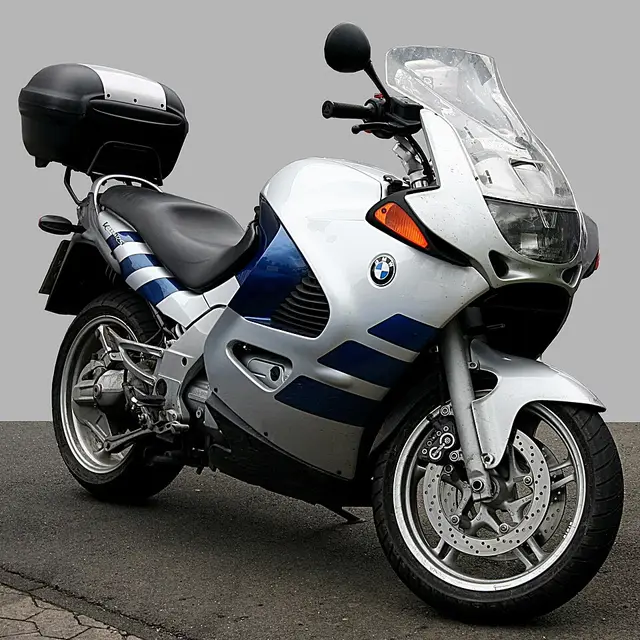
_ret.jpg)
- 6owner complaints
- 4safety recalls
- 2NHTSA investigations
- 0complaints mentioning a crash
Complaints are unverified owner reports and are not adjusted for sales volume.
Most common 1998 BMW K1200RS problems
Complaints grouped by the part of the car owners reported, with the median mileage when the problem happened.
| Problem area | Complaints | Share | Median miles | Owners mention most | Typical repair cost |
|---|---|---|---|---|---|
| Fuel System, Gasoline | 4 | 67% | 59,000 | — | — |
| Power Train | 1 | 17% | — | — | — |
| Service Brakes, Hydraulic | 1 | 17% | 52,000 | — | — |
One complaint can list several problem areas, so shares can add up to more than 100%.
Complaints by year received
1998 BMW K1200RS recalls (4)
Tap a recall to see the problem, the risk and the fix.
Engine and engine cooling:engine
Problem: Vehicle description: motorcycles. A spring-loaded thermostatic element in the oil thermostat housing is held in place by a cover that is retained by a snap ring. The snap ring may not have been properly installed during production. During vehicle operation, the snap ring could unseat, allowing the cover to loosen or detach, resulting in loss of the entire oil volume.
Risk: Engine damage could occur if the engine is not immediately switched off. In addition, oil could travel along the engine cover and ultimately contact the rear tire, reducing its traction and affecting the stability of the motorcycle, possibly resulting in a crash and personal injury.
Fix: Dealers will inspect the snap ring installation and if the snap ring is not fully seated, the complete oil pump intermediate flange will be replaced.
Engine and engine cooling:engine
Problem: Vehicle description: motorcycles. The cylinder head contains two sealing plugs covering holes in the area near the spark plugs. One or both plugs may not have been fully seated during vehicle assembly. Either or both of the sealing plugs could loosen or completely detach from their mounting point during vehicle operation.
Risk: This condition could allow coolant to escape, travel along the engine cover, and contact the rear tire, reducing its traction and affecting the stability of the motorcycle. In addition, the loss of coolant could lead to increased engine operating temperature and possible overheating.
Fix: Dealers will replace the sealing plugs with a stainless steel plug design.
Fuel system, gasoline:storage:tank assembly
Problem: Vehicle description: motorcycles. During extended operation in high ambient temperature conditions, the area of the pump mounting surface of the fuel tank can deform, forming a gap between the tank mounting surface and the gasket, allowing fuel to escape from the tank at that area.
Risk: If an ignition source was present, a fire could occur resulting in personal injury.
Fix: Dealers will replace the fuel pump-to-tank gasket.
Service brakes, hydraulic
Problem: Vehicle description: motorcycles. The adjusting screw for the pressure point of either the brake or clutch levers may not be sufficiently tight, due to grease contamination of the threads.
Risk: The screw(s) can back out over time while the vehicle is being operated causing a change in the pressure point of the master cylinder for the clutch and/or front brake increasing the risk of a vehicle crash.
Fix: Dealers will check the adjustment screws of the front brake and clutch levers for movement. If the screws are tight, no further action will be taken. If a screw is found to be loose, it will be removed, cleaned and reinstalled with new loctite.
To see whether a specific car still has an open recall, enter its VIN on NHTSA's official recall lookup. You can also decode a VIN here.
NHTSA defect investigations
- Fuel tank leak (PE98047) — opened Aug 27, 1998, closed Oct 15, 1998, led to recall 98V258000.
- Reduced clutch and brake effectiveness (SQ97023) — opened Nov 14, 1997, closed Dec 22, 1997.
Recent owner reports
Short excerpts of the latest complaints filed with NHTSA, with personal details removed. Full reports can be searched on NHTSA.gov.
(note that the incident date and failure mileage reported are approximate.) when the failure occurred, the two abs warning lights on the dash panel flashed alternately as they normally do upon engine start-up, but did not stop flashing once the motorcycle was underway as they normally should do…
Recall 14401 from oct. 14, 1988. This vehicle was fixed under warranty in 2001 under this recall. It failed again recently and fuel started leaking. The parts to do the remedy are no longer available per my dealer. The only alternative is to replace the fuel tank and related components with a style…
Vehicle was delivered with a transmission that refused, at times to shift upwards to higher gears. Usually this occured in colder weather and after being ridden for some distance before a brief period of cooling occurred triggering the problem. Warrantee replacement was denied because dealership…
Motorcycle parked in 90 degree garare after ride. One half hour later gas puddle 3' in diameter under bike dripping from tank onto hot engine then hot exhaust and garage filled with vapors. No smell of fuel when parking, sudden failure.
Massive leaking of gasoline from tank appears to be related to hot weather and expansion of gasket interface between tank bladder and fuel pump, repair work on tank
Other BMW K1200RS years
← 1997 K1200RS · 1999 K1200RS →
| Year | Complaints | Recalls |
|---|---|---|
| 2003 K1200RS | 5 | 0 |
| 2002 K1200RS | 18 | 0 |
| 2001 K1200RS | 7 | 0 |
| 2000 K1200RS | 4 | 1 |
| 1999 K1200RS | 2 | 1 |
| 1998 | 6 | 4 |
| 1997 K1200RS | 1 | 0 |
See all BMW K1200RS problems by year, every BMW model, or the BMW VIN decoder.
Similar BMW models
Embed this 1998 BMW K1200RS badge on your site
Copy this code into your blog or forum post. It shows live complaint and recall counts and links back here.
Frequently asked questions
What are the most common problems with the 1998 BMW K1200RS?
Owners most often report fuel system, gasoline, power train, service brakes, hydraulic problems. The top one, fuel system, gasoline, accounts for 4 complaints.
Was there a recall on the 1998 BMW K1200RS?
Yes, 4 safety recalls. Enter your VIN at NHTSA.gov to check whether the repairs were done on your car.
Was the 1998 BMW K1200RS a good year?
Complaint data can't fully answer that, because counts aren't adjusted for sales. Compared with other K1200RS model years, the 1998 has too little data to compare. Always get a pre-purchase inspection and check the VIN for open recalls.