1999 Blue Bird ALL American Problems, Complaints & Recalls
- Compared with other ALL American years
- Not enough data 15th of 25 for complaints
- Safety recalls
- 16 recalls: check your VIN
- NHTSA crash rating
- Not rated
NHTSA has received no owner complaints about the 1999 Blue Bird ALL American so far. There are 16 safety recalls covering this model year.
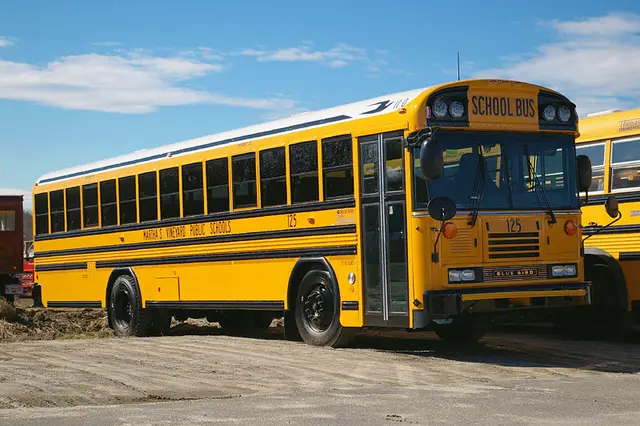

- 0owner complaints
- 16safety recalls
- 0NHTSA investigations
- 0complaints mentioning a crash
Complaints are unverified owner reports and are not adjusted for sales volume.
1999 Blue Bird ALL American recalls (16)
Tap a recall to see the problem, the risk and the fix.
Fuel system, diesel
Problem: Certain 1998 through 2002 blue bird all american, tc2000 school and transit buses, and commercial series buses equipped with cummins isb diesel engines. The fuel pump could fail to transfer fuel appropriately creating an engine stall condition.
Risk: Should the engine stall while the vehicle is in use, a possible vehicle crash could occur.
Fix: Customers will be notified by cummins to bring their vehicles to an authorized dealer to have the fuel lift pump replaced free of charge. For more information, customers may contact cummins at 1-800-diesels.
Structure:body
Problem: Certain school buses fail to comply with the requirements of federal motor vehicle safety standard no. 221, "school bus body joint strength." one or more of the bolts attaching the driver's platform to the floor structure was omitted.
Risk: The rear of the driver's platform may not be properly retained in the event of a crash which could increase the risk of injury or death to passengers.
Fix: Blue bird will notify its customers and inspect and repair the affected units. Owner notification began on november 20, 2003. Owners who take their vehicles to an authorized dealer on an agreed upon service date and do not receive the free remedy within a reasonable time should contact blue bird at 478-822-2242.
Electrical system:alternator/generator/regulator
Problem: On certain school and transit buses equipped with cummins isb 6 cylinder engines, the lower alternator support brace or mounting hardware can loosen or break which will allow the alternator to drop onto the engine.
Risk: In this event, the electrical wiring harness may be damaged and the possibility of fire may exist.
Fix: Cummins will notify customers and replace the upper and lower alternator support brackets free of charge. Owners who take their vehicle to an authorized dealer on an agreed upon service date and do not receive the free remedy within a reasonable time should contact cummins at 1-800-343-7357 or blue bird at 478-822-2242.
Equipment:other:labels
Problem: Certain transit buses fail to comply with requirements of federal motor vehicle standard no. 101, "controls and displays." this standard requires specific labeling for "engine start" and "engine stop." the wording of the labels on these vehicles do not meet the requirements of the standard.
Risk: The operator could place the engine switch in a position other than that intended, increasing the risk of a crash.
Fix: Owners will be provided with new decals and installation instructions. Owner notification began august 29, 2002. Owners who do not receive the free label and installation instructions within a reasonable time should contact blue bird at 1-478-822-2242.
Suspension
Problem: Vehicle description: school buses equipped with hendrickson rear air suspension. Inadequate tightening of the 5/8" bolts on the rear air suspension hanger bolts and on rear axle torque arm axle seat studs.
Risk: Insufficient tightening permits movement between the components that could result in bolts and studs breaking, increasing the risk of a crash.
Fix: Dealers will replace the 5/8" grade 8-hanger bolts. In addition, axle spring seat fasteners will be checked for proper tightness and, if needed, tightened to specifications. Owner notification began january 18, 2002. Owners who take their vehicles to an authorized dealer on an agreed upon service date and do not receive the free remedy within a reasonable time should contact blue bird at 1-478-822-2242.
Electrical system:wiring
Problem: Vehicle description: school and transit buses equipped with rear mounted engines. The 12-volt power supply cable(s) may be chaffed by hoses, harnesses, frame components, or clamps.
Risk: This condition can result in power failure and/or risk of fire in the engine compartment.
Fix: Dealers will remove and inspect the 12-volt power cable(s) from the battery to the starter and, if necessary, will replace the cables. Owner notification began july 30, 2001. Owners who take their vehicles to an authorized dealer on an agreed upon service date and do not receive the free remedy within a reasonable time should contact blue bird at 1-912-822-2242.
Steering:linkages:tie rod assembly
Problem: Vehicle description: school and transit buses and motor home chassis equipped with tie rod assemblies manufactured by trw. The suspect tie rods contain 24-dl model ball sockets. Certain of the tie rod ball-socket bearings have a below-specification case depth and/or hardness, which can lead to premature wear of the socket.
Risk: If this condition occurs, the driver can lose partial control of the right front wheel, possibly resulting in a crash.
Fix: Dealers will replace the defective ball sockets and/or drag links. Owner notification began march 30, 2001. Owners who take their vehicles to an authorized dealer on an agreed upon service date and do not receive the free remedy within a reasonable time should contact blue bird at 1-912-822-2242 or trw customer service at 1-866-280-3287.
Service brakes, air:antilock
Problem: Vehicle description: transit and school buses equipped with meritor wabco phase 1, d-version antilock brake system (abs), fail to comply to the requirements of fmvss no. 105, "hydraulic and electric brake systems." an internal diagnostic system in the abs may not detect an extreme wheel speed sensor air gap. Such a condition could possibly occur during (1) original assembly or (2) subsequent wheel end service.
Risk: Failure of the electronic control unit to detect an extreme wheel speed sensor air gap can result in the loss of antilock braking function on the wheel(s) where the air gap exists, increasing the risk of a crash.
Fix: The abs ecu will be removed and replaced or the ecu will be reprogrammed.
Service brakes, air:antilock
Problem: Vehicle description: school and transit buses built with bendix air abs with an ec-17 1030r electronic control unit (ecu), there have been reports of unwanted abs activation at low speeds caused by 1) chafed abs wheel speed sensor wires on rotating parts or 2) a damaged component at the wheel end that generates a certain type of erratic sensor signal.
Risk: This condition could cause the abs ecu to exhaust the air at the air brake modulators for one or more of the wheels. This could result in extended braking distances and a possible crash.
Fix: Dealers will replace the abs ecu.
Steering:gear box (other than rack and pinion)
Problem: Vehicle description: school and transit buses. These buses could have improperly installed or missing pinch bolts in the steering shaft assemblies.
Risk: This can result in disengagement of the steering slip shaft assembly and loss of steering.
Fix: Owners will be provided with installation instructions and new replacement bolts and locking nuts for the steering shaft assemblies.
Vehicle speed control:accelerator pedal
Problem: Vehicle description: school and transit buses equipped with electronic engines and felsted electronic accelerator pedals. The return springs can break on the accelerator pedals that are equipped with stainless steel or electroplated music wire return springs.
Risk: This condition could cause the pedal to go to full throttle if both return springs break, increasing the risk of a crash.
Fix: Replacement accelerator pedals equipped with return springs manufactured of music wire with one additional coil on each spring and with an organic coating, eliminating electroplating will be installed.
Electrical system:wiring:front underhood
Problem: Vehicle description: school and transit buses equipped with cummins isc engines. The wiring harness to the combustion air intake grid heater can chafe against the engine and wear through.
Risk: This condition can cause an electrical short in the grid heater power supply.
Fix: Owners will be advised to re-route the original grid heater power supply harness. In addition, a clamp will be added to support the harness away from the engine components.
Service brakes, air:controls:foot control/valve
Problem: Vehicle description: school and transit buses equipped with bendix air brakes. Bendix changed the internal design of the qr1c relay valve by adding a hole in the internal diaphragm. When the hole in the diaphragm aligns with the hole in the valve body, the brake application time increases.
Risk: Under certain conditions, such as parked on an incline, driver activates the parking brake but removes foot from the threadle valve, the bus could roll before the parking brake is fully engaged.
Fix: Dealers will replace the diaphragms with holes with solid diaphragms for the qr1c valves.
Steering:hydraulic power assist system
Problem: Vehicle description: front engine school and transit buses. The power distribution unit (pdu) cables are inadequately supported or routed in close proximity to the steering pitman arm.
Risk: The cable can chafe resulting in an electrical short, increasing the risk of a fire.
Fix: Owners will be provided with step by step repair instructions for re-routing the wires.
Service brakes, air:supply:hoses, lines/piping, and fittings
Problem: Vehicle description: school and transit buses equipped with bendix abs anti-lock braking system. The primary and secondary brake treadle valve air lines were installed incorrectly at the bendix r12dc relay valve.
Risk: With the brake system installed incorrectly, future maintenance might be affected by this inconsistency, causing the brakes to be installed incorrect, increasing the risk of a crash.
Fix: Dealers will correct the air line plumbing at the bendix r12dc relay valve.
Electrical system:ignition:switch
Problem: Vehicle description: front engine school buses equipped with allison world transmissions. These buses do not fully comply with the requirements of fmvss no. 102, "transmission, shift lever sequence, starter interlock, and transmission braking effect." the neutral safety switch is wired incorrectly allowing the starter to engage when the ignition is turned "on," followed by the transmission selector being placed in forward or reverse positions, and then the ignition turned to the "start" position.
Risk: This condition would cause the engine to star and run if the ignition was turned to the "start" position, increasing the risk of a crash.
Fix: Owners will be provided with parts and instructions necessary to modify the engine starter/transmission shift electrical circuitry. If an owner so desires, a dealer can perform the modification for them.
To see whether a specific car still has an open recall, enter its VIN on NHTSA's official recall lookup. You can also decode a VIN here.
Other Blue Bird ALL American years
← 1998 ALL American · 2000 ALL American →
See all Blue Bird ALL American problems by year, every Blue Bird model, or the VIN decoder.
Embed this 1999 Blue Bird ALL American badge on your site
Copy this code into your blog or forum post. It shows live complaint and recall counts and links back here.
Frequently asked questions
What are the most common problems with the 1999 Blue Bird ALL American?
NHTSA has no owner complaints on file yet.
Was there a recall on the 1999 Blue Bird ALL American?
Yes, 16 safety recalls. Enter your VIN at NHTSA.gov to check whether the repairs were done on your car.
Was the 1999 Blue Bird ALL American a good year?
Complaint data can't fully answer that, because counts aren't adjusted for sales. Compared with other ALL American model years, the 1999 has too little data to compare. Always get a pre-purchase inspection and check the VIN for open recalls.