2003 Honda CR-V Problems, Complaints & Recalls
- Compared with other CR-V years
- About as many complaints as other years 14th of 30 for complaints
- Safety recalls
- 13 recalls: check your VIN
- NHTSA crash rating
- Not rated
Owners have filed 468 complaints with NHTSA about the 2003 Honda CR-V. That ranks 14th out of 30 CR-V model years for complaints. The most reported problem area is air bags (125 complaints, 27%), typically at around 103,595 miles. Complaints mention 44 crashes, 25 fires, 39 injuries. There are 13 safety recalls covering this model year. NHTSA has opened 8 defect investigations involving it.
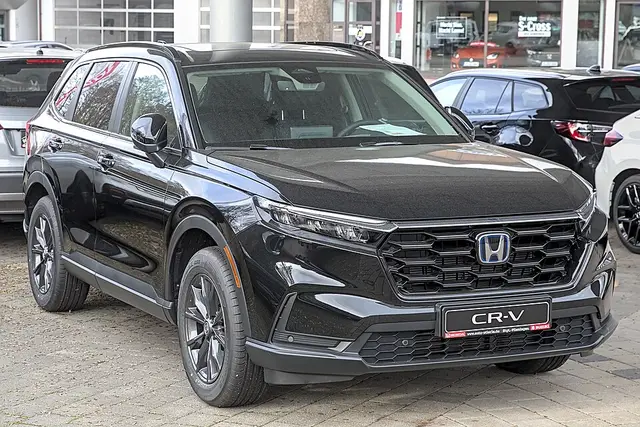
_hybrid_1X7A1957.jpg)
- 468owner complaints
- 13safety recalls
- 8NHTSA investigations
- 44complaints mentioning a crash
Complaints are unverified owner reports and are not adjusted for sales volume.
Most common 2003 Honda CR-V problems
Complaints grouped by the part of the car owners reported, with the median mileage when the problem happened.
| Problem area | Complaints | Share | Median miles | Owners mention most | Typical repair cost |
|---|---|---|---|---|---|
| Air Bags problems | 125 | 27% | 103,595 | “consumer writes regards” (7%) | — |
| Engine and Engine Cooling problems | 86 | 18% | 64,000 | “air conditioning” (16%) | $2,800 |
| Electrical System problems | 62 | 13% | 96,750 | “low beam” (13%) | — |
| Exterior Lighting | 39 | 8% | 120,500 | — | — |
| Vehicle Speed Control | 32 | 7% | 77,000 | — | — |
| Equipment | 30 | 6% | 63,562 | — | — |
| Unknown or Other | 24 | 5% | 99,980 | — | — |
| Power Train | 23 | 5% | 39,750 | — | — |
| Visibility | 18 | 4% | 98,550 | — | — |
| Latches/locks/linkages | 17 | 4% | 70,000 | — | — |
| Steering | 14 | 3% | 28,000 | — | — |
| Structure | 14 | 3% | 98,000 | — | — |
| Service Brakes, Hydraulic | 13 | 3% | 24,905 | — | — |
| Suspension | 13 | 3% | 8,312 | — | — |
| Seat Belts | 12 | 3% | 34,143 | — | — |
| Tires | 9 | 2% | 23,570 | — | — |
| Engine | 6 | 1% | 135,000 | — | — |
| Fuel/propulsion System | 6 | 1% | 160,000 | — | — |
| Fuel System, Gasoline | 6 | 1% | 16,605 | — | — |
| Visibility/wiper | 6 | 1% | 113,500 | — | — |
| Service Brakes | 4 | 1% | 158,000 | — | — |
| Equipment Adaptive/mobility | 2 | 0% | 86,453 | — | — |
| Wheels | 2 | 0% | — | — | — |
| Electronic Stability Control (esc) | 1 | 0% | 2 | — | — |
| Interior Lighting | 1 | 0% | 215,213 | — | — |
| Seats | 1 | 0% | — | — | — |
| Service Brakes, Air | 1 | 0% | 500 | — | — |
One complaint can list several problem areas, so shares can add up to more than 100%.
Complaints by year received
2003 Honda CR-V recalls (13)
Tap a recall to see the problem, the risk and the fix.
Visibility:power window devices and controls; electrical system
Problem: Honda (American Honda Motor Co.) is recalling certain 2002-2006 CR-V vehicles. Moisture may enter the driver side power window master switch, causing the switch to fail or melt.
Risk: If the switch fails, it could overheat and smoke, increasing the risk of a fire.
Fix: Honda will notify owners, and dealers will replace the power window master switch and inspect the wiring harness for damage, replacing it if necessary, free of charge. The recall began January 29, 2021. Owners may contact Honda customer service at 1-888-234-2138. Honda's number for this recall is P9D.
Air bags:frontal:driver side:inflator module
Problem: Honda (American Honda Motor Co.) is recalling certain 2003 Acura 3.2CL, 2002-2003 3.2TL, 2003-2006 MDX, 2001-2007 Honda Accord, 2001-2005 Civic, 2003-2005 Civic Hybrid, 2001-2005 Civic GX NGV, 2002-2006 CR-V, 2003-2011 Element, 2002-2004 Odyssey, 2003-2008 Pilot and 2006 Ridgeline vehicles. These vehicles are equipped with driver frontal air bag inflators assembled as a recall remedy part or replacement service part, that may explode due to propellant degradation occurring after long-term exposure to high absolute humidity, temperature and temperature cycling.
Risk: An inflator explosion may result in sharp metal fragments striking the driver or other occupants resulting in serious injury or death.
Fix: Honda will notify owners, and dealers will replace the driver frontal air bag inflator, free of charge. The recall began August 12, 2019. Owners may contact Honda customer service at 1-888-234-2138. Honda's numbers for this recall are Q5A and Y58.
Air bags:frontal:passenger side:inflator module
Problem: Honda (American Honda Motor Co.) is recalling certain 2003-2006 Acura MDX, 2005-2012 RL, 2003-2007 Honda Accord, 2001-2005 Civic, 2003-2005 Civic Hybrid, 2001-2005 Civic GX NGV, 2002-2006 CR-V, 2003-2011 Element, 2007-2008 Fit, 2002-2004 Odyssey, 2003-2008 Pilot, and 2006-2014 Ridgeline vehicles. The vehicles are equipped with passenger frontal air bag inflators assembled as a recall remedy part or replacement service part, that may explode due to propellant degradation occurring after long-term exposure to high absolute humidity, temperature and temperature cycling.
Risk: An inflator explosion may result in sharp metal fragments striking the driver or other occupants resulting in serious injury or death.
Fix: Honda will notify owners, and dealers will replace the passenger frontal airbag inflator, free of charge. The recall began August 12, 2019. Owners may contact Honda customer service at 1-888-234-2138. Honda's numbers for this recall are E5D and X5C.
Air bags:frontal:driver side:inflator module
Problem: Honda (American Honda Motor Co.) is recalling specific 2003 Acura 3.2CL, 2013-2016 ILX, 2013-2014 ILX Hybrid, 2003-2006 MDX, 2007-2016 RDX, 2002-2003 3.2TL, 2004-2006, and 2009-2014 TL, 2010-2013 ZDX and 2001-2007 and 2009 Honda Accord, 2001-2005 Civic, 2003-2005 Civic Hybrid, 2001-2005 Civic GX NGV, 2002-2007 and 2010-2011 CR-V, 2003-2011 Element, 2007 Fit, 2002-2004 Odyssey, 2003-2008 Pilot, and 2006-2014 Ridgeline vehicles. The affected vehicles received a replacement driver air bag inflator as part of a previous Takata inflator recall remedy or a replacement driver air bag module containing the same inflator type as a service part. Due to a manufacturing error, in the event of a crash necessitating deployment of the driver frontal air bag, these inflators may explode.
Risk: An explosion of an inflator within the driver frontal air bag module may result in sharp metal fragments striking the driver, front seat passenger or other occupants resulting in serious injury or death.
Fix: Honda will notify owners, and dealers will replace the driver's air bag inflator with an alternate inflator, free of charge. The recall began April 10, 2019. Honda owners may contact customer service at 1-888-234-2138. Honda's number for this recall is O41. Acura owners may contact customer service at 1-888-234-2138. Acura's number for this recall is U40.
Air bags:frontal:passenger side:inflator module
Problem: Honda (American Honda Motor Co.) is recalling certain 2003-2012 Honda Accord and Pilot, 2010 Accord Crosstour, 2001-2011 Civic, 2002-2011 CR-V, 2003-2004, 2006-2008 and 2011 Element, 2007 and 2009-2013 Fit, 2010-2012 Insight, 2002-2004 Odyssey, and 2012 Ridgeline vehicles. The front passenger air bag may have been installed incorrectly during replacement.
Risk: An incorrectly installed air bag may deploy improperly in the event of a crash, increasing the risk of injury.
Fix: Honda will notify owners, and dealers will inspect and, if necessary, replace the passenger frontal air bag module assembly, free of charge. The recall began June 22, 2018. Owners may contact Honda customer service at 1-888-234-2138. Honda's numbers for this recall are K1P, and M1O.
Air bags:frontal:passenger side:inflator module
Problem: Honda (American Honda Motor Co.) is recalling certain model year 2001-2005 Honda Civic vehicles manufactured March 21, 2000, to January 20, 2005, 2001-2004 Honda Civic GX vehicles manufactured June 14, 2000, to August 19, 2004, 2003-2005 Honda Civic Hybrid vehicles manufactured February 24, 2002, to January 18, 2005, 2003-2007 Honda Accord vehicles manufactured February 21, 2002, to August 28, 2007, 2002-2004 Honda CR-V vehicles, 2002-2003 Honda Odyssey vehicles manufactured June 19, 2001, to July 12, 2003, 2003 Acura MDX vehicles manufactured September 19, 2002, to June 19, 2003, 2003 Honda Element vehicles manufactured June 25, 2002, to July 31, 2003, and 2003 Honda Pilot vehicles manufactured November 26, 2001, to August 21, 2003. The affected vehicles have a passenger side frontal air bag that may be susceptible to moisture intrusion which, over time, could cause the inflator to rupture upon its deployment.
Risk: In the event of a crash necessitating deployment of the passenger's frontal air bag, the inflator could rupture with metal fragments striking the passenger seat occupant or other occupants possibly causing serious injury or death.
Fix: Honda will notify owners, and dealers will replace the passenger air bag inflator, free of charge. The recall began on July 1, 2015. Owners may contact Honda customer service at 1-888-234-2138. Honda's numbers for this recall are JU4, JU5, JU6, and JU7. Note: Vehicles that have already received a replacement passenger air bag inflator as part of the recall remedy for an earlier campaign such as 14V353 or 14V700 (Honda recall numbers S95, JH6, JH7, JH8, JH9, JJ0, JJ1, JJ2, JJ6, JM5 and JM6) are not included in this recall. However, this recall does supersede 13V132 and 14V349. Note: On December 18, 2015 Honda informed NHTSA of an expansion of this recall to include certain model year 2004 Honda CR-V vehicles in addition to additional model year 2003 CR-V vehicles.
Air bags:frontal:driver side:inflator module
Problem: Honda (American Honda Motor Co.) is recalling certain model year 2001-2007 Accord, 2001-2005 Civic, 2001-2004 Honda Civic GX, 2003-2005 Honda Civic Hybrid, 2002-2006 CR-V, 2003-2011 Element, 2002-2004 Odyssey, 2003-2008 Pilot, 2006 Ridgeline, 2003 Acura 3.2CL, 2003-2006 Acura MDX, and 2002-2003 Acura 3.2TL vehicles. The affected vehicles are equipped with a dual-stage driver frontal air bag that may be susceptible to moisture intrusion and other factors, including manufacturing variability that, over time, could cause the inflator to rupture.
Risk: In the event of a crash necessitating deployment of the driver's frontal air bag, the inflator could rupture with metal fragments striking the driver or other occupants resulting in serious injury or death.
Fix: Honda will notify owners, and dealers will replace the driver frontal air bag inflator, free of charge. The recall began on July 1, 2015. Owners may contact Honda customer service at 1-888-234-2138. Owners may contact Acura customer service at 1-800-382-2238, select option 4. Note: Vehicles that have had their driver frontal air bag replaced previously as part of a recall remedy prior to September 12, 2014 need to have their air bag replaced under this recall as well. Vehicles that, on or after September 12, 2014, received a remedy for a prior driver frontal air bag inflator recall already received an inflator of a different design, and therefore are not included in this recall and do not require additional servicing. Note: This recall fully supersedes recalls 08V-593, 09V-259, 10V-041, 11V-260, 14V-351 and 15V-153. Honda's numbers for this recall are JQ9, JR0, JR1, JR2, JR3, JR4, JR5, JR6, JR7, and JR8.
Air bags
Problem: American Honda Motor Co. (Honda) is recalling certain model year 2001-2005 Honda Civic, 2003-2004 Civic CNG and Element, 2002-2005 CR-V, 2002-2004 Odyssey, 2003-2005 Accord, Pilot, Civic Hybrid, and Acura MDX, 2005 Acura RL and 2006 Honda Ridgeline vehicles originally sold, or ever registered, in geographic locations associated with high absolute humidity. Specifically, vehicles sold, or ever registered, in Alabama, Florida, Georgia, Hawaii, Louisiana, Mississippi, South Carolina, Texas, Puerto Rico, U.S. Virgin Islands, Saipan, Guam, and American Samoa are addressed by this recall. Upon deployment of the passenger side frontal air bag, excessive internal pressure may cause the inflator to rupture.
Risk: In the event of a crash necessitating deployment of the passengerÂs frontal air bag, the inflator could rupture with metal fragments striking the vehicle occupants potentially resulting in serious injury or death.
Fix: Honda will notify owners, and dealers will replace the passenger side air bag inflator, free of charge. The recall began January 26, 2015. Owners may contact Honda customer service at 1-800-999-1009.
Air bags
Problem: American Honda Motor Company, Inc.'s (Honda) is conducting a limited regional recall for certain model year 2003-2005 Accord, Civic, CR-V, Pilot and Acura MDX, model year 2003-2004 Odyssey and Element, and model year 2005 Acura RL, and 2006 Honda Ridgeline vehicles originally sold, or ever registered in California, and equipped with Takata-brand air bag inflators. Upon deployment of the passenger side frontal air bag, excessive internal pressure may cause the inflator to rupture.
Risk: In the event of a crash necessitating deployment of the passengerÂs frontal air bag, the inflator could rupture with metal fragments striking the vehicle occupants potentially resulting in serious injury or death.
Fix: Honda will notify owners, and dealers will replace the inflators in all affected vehicles, free of charge. The recall is expected to begin during August 2014. Owners may contact Honda customer service at 1-800-999-1009.
Visibility:power window devices and controls; electrical system
Problem: Honda is recalling certain model year 2002-2006 CR-V passenger vehicles, manufactured from February 19, 2002, through July 28, 2006. The driver-side power window switch may fail or melt.
Risk: If the switch fails, it could overheat, smoke, and cause a fire. A switch failure, and a fire, could occur even if the vehicle is not in use. As a precaution, owners are advised to park outside until the recall repair has been performed.
Fix: Honda will notify owners, and dealers will inspect and repair the switches, as necessary, free of charge. The safety recall began on November 2, 2012. Owners may contact Honda at 1-800-999-1009.
Exterior lighting:headlights:switch
Problem: Honda is recalling certain model year 2002 through 2004 cr-v; model year 2003 through 2005 pilot; and model year 2002 and 2003 civic vehicles. In march 2012, honda filed a defect report to recall certain model year 2002 through 2004 cr-v and certain model year 2003 pilot vehicles. In august 2012, honda informed the agency that it was including an additional 820,789 vehicles including certain model year 2004 and 2005 pilots and model year 2002 and 2003 civics. The total number of vehicles being recalled is now 1,375,217. Due to tension from the combination switch wiring harness, wear on the surface of the electrical terminal can occur, yielding copper oxide, which increases electrical resistance. Increased electrical resistance may cause the terminal ends to melt within the wiring harness connector.
Risk: If the terminal ends melt within the wiring harness connector, the low beam headlights may become inoperative, reducing driver visibility and increasing the risk of a crash.
Fix: Honda will notify owners, and dealers will repair the low beam terminal harness or replace the lighting switch as necessary, free of charge. The original recall began in april 2012. Owners of vehicles involved in the september 2012 expansion will be notified in september 2012. Owners may contact honda customer service at 1-800-999-1009.
Air bags:frontal
Problem: On certain sport utility vehicles, the wire harness of the driver's front air bag was incorrectly wired.
Risk: In the event of a crash, the air bag inflation rate would be incorrect, which could increase the risk of injury to the driver.
Fix: Dealers will repair the wiring. Owner notification began on june 16, 2004. Owners should contact honda at 1-800-999-1009.
Power train:automatic transmission
Problem: On certain sport utility vehicles equipped with automatic transmissions, excessive corrosion of the shift cable linkage could prevent the driver from shifting the automatic transmission into park.
Risk: If the vehicle operator fails to engage the parking brake, the vehicle could roll and a crash could occur. Dealers will inspect the shift cable linkage for corrosion. If corrosion causes binding, they will replace the shift cable.
Fix: Dealers will also install a new corrosion-resistant control pin. Owner notification began on august 19, 2003. Owners should contact honda at 1-800-999-1009.
To see whether a specific car still has an open recall, enter its VIN on NHTSA's official recall lookup. You can also decode a VIN here.
NHTSA defect investigations
- Desiccated Air Bag Inflator Rupture (EA21002) — opened Sep 17, 2021, still open.
- Air Bag Inflator Rupture (EA15001) — opened Feb 24, 2015, still open, led to recall 14V668.
- Air Bag Inflator Rupture (PE14016) — opened Jun 11, 2014, closed Mar 2, 2015, led to recall 13V172000.
- Low Beam Headlights Stop Illuminating (EA11012) — opened Sep 12, 2011, closed Sep 17, 2012, led to recall 12V136000.
- Low Beam Headlights Stop Working (PE11017) — opened Apr 29, 2011, closed Sep 23, 2011.
- Driver's Power Window Master Switch (EA11004) — opened Apr 11, 2011, closed Oct 24, 2012, led to recall 11V456000.
- Underhood fires (EA04027) — opened Sep 9, 2004, closed Jan 19, 2005.
- Oil filter fires (PE04018) — opened Feb 19, 2004, closed Jul 1, 2004.
Recent owner reports
Short excerpts of the latest complaints filed with NHTSA, with personal details removed. Full reports can be searched on NHTSA.gov.
I got over to the edge of the road to avoid hitting a animal, and hit a small rock (with front passenger tire) and then subsequently had a spontaneous deployment and rupture of my passenger airbag, then my driver airbag deployed. A fire then came from the passenger airbag, with lots of dust in the…
Corrosion of the rear frame led to the trailing arm separating, and I nearly hit a tree.
SRS LIGHT CAME ON 2 MONTHS AGO. FEAR FOR MY SAFETY. RECALL PLEASE. ELECTRICAL. BACK RT WINDOW AND RT FRONT DOOR LOCK CANNOT BE OPERATED FROM FRONT DRIVER DOOR. LIGHTING. BACK INTERIOR LIGHT DOES NOT TURN OFF AUTOMATICALLY. Paint is peeling from all over the car, especially on the front of it. Looks…
The contact owns a 2003 Honda CR-V. The contact stated that while operating the vehicle, the check engine warning light remained illuminated, and the engine fan was inoperable causing the engine to overheat. The vehicle was taken to the local mechanic who replaced the thermostat, but the failure…
I let my daughter borrow my crv, she was coming backing from making errands going around a corner and she could not control the vehicle, she continued to try to turn the wheel in the direction she wanted to go but it would not, she ended up hitting another vehicle and came to a rest in someoneâs…
Other Honda CR-V years
| Year | Complaints | Recalls |
|---|---|---|
| 2026 CR-V | 156 | 0 |
| 2025 CR-V | 258 | 1 |
| 2024 CR-V | 392 | 2 |
| 2023 CR-V | 516 | 3 |
| 2022 CR-V | 265 | 3 |
| 2021 CR-V | 335 | 4 |
| 2020 CR-V | 355 | 7 |
| 2019 CR-V | 1,106 | 8 |
| 2018 CR-V | 2,158 | 5 |
| 2017 CR-V | 1,775 | 7 |
| 2016 CR-V | 394 | 3 |
| 2015 CR-V | 672 | 3 |
| 2014 CR-V | 587 | 1 |
| 2013 CR-V | 382 | 2 |
| 2012 CR-V | 403 | 3 |
| 2011 CR-V | 554 | 13 |
| 2010 CR-V | 481 | 15 |
| 2009 CR-V | 386 | 12 |
| 2008 CR-V | 962 | 11 |
| 2007 CR-V | 887 | 12 |
| 2006 CR-V | 398 | 12 |
| 2005 CR-V | 479 | 12 |
| 2004 CR-V | 501 | 12 |
| 2003 | 468 | 13 |
| 2002 CR-V | 515 | 15 |
| 2001 CR-V | 142 | 1 |
| 2000 CR-V | 129 | 2 |
| 1999 CR-V | 127 | 3 |
| 1998 CR-V | 128 | 3 |
| 1997 CR-V | 108 | 2 |
See all Honda CR-V problems by year, every Honda model, or the Honda VIN decoder.
Similar Honda models
Embed this 2003 Honda CR-V badge on your site
Copy this code into your blog or forum post. It shows live complaint and recall counts and links back here.
Frequently asked questions
What are the most common problems with the 2003 Honda CR-V?
Owners most often report air bags, engine and engine cooling, electrical system problems. The top one, air bags, accounts for 125 complaints.
Was there a recall on the 2003 Honda CR-V?
Yes, 13 safety recalls. Enter your VIN at NHTSA.gov to check whether the repairs were done on your car.
Was the 2003 Honda CR-V a good year?
Complaint data can't fully answer that, because counts aren't adjusted for sales. Compared with other CR-V model years, the 2003 has about as many complaints as a typical year. Always get a pre-purchase inspection and check the VIN for open recalls.