1999 Ford F-150 Problems, Complaints & Recalls
- Compared with other F-150 years
- About as many complaints as other years 16th of 33 for complaints
- Safety recalls
- 7 recalls: check your VIN
- NHTSA crash rating
- Not rated
Owners have filed 1,044 complaints with NHTSA about the 1999 Ford F-150. That ranks 16th out of 33 F-150 model years for complaints. The most reported problem area is engine and engine cooling (219 complaints, 21%), typically at around 85,250 miles. Complaints mention 86 crashes, 69 fires, 82 injuries. There are 7 safety recalls covering this model year. NHTSA has opened 5 defect investigations involving it.
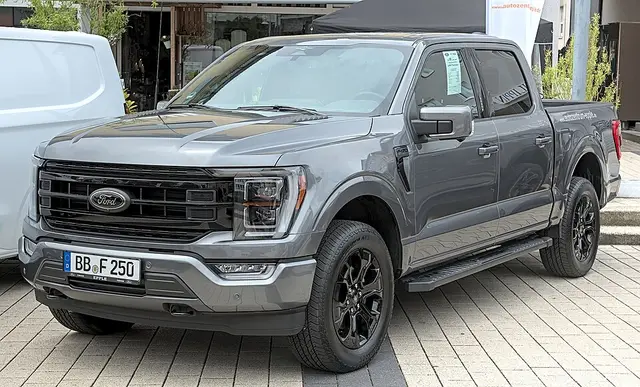
_Rutesheimer_Autoschau_2025_DSC_9217.jpg)
- 1,044owner complaints
- 7safety recalls
- 5NHTSA investigations
- 86complaints mentioning a crash
Complaints are unverified owner reports and are not adjusted for sales volume.
Most common 1999 Ford F-150 problems
Complaints grouped by the part of the car owners reported, with the median mileage when the problem happened.
| Problem area | Complaints | Share | Median miles | Owners mention most | Typical repair cost |
|---|---|---|---|---|---|
| Engine and Engine Cooling problems | 219 | 21% | 85,250 | “spark plug” (32%) | $4,500 |
| Fuel System, Gasoline problems | 112 | 11% | 135,356 | “fuel tank” (59%) | — |
| Service Brakes, Hydraulic problems | 97 | 9% | 88,500 | “brake line” (11%) | — |
| Structure problems | 95 | 9% | 85,245 | “side door” (19%) | — |
| Electrical System problems | 85 | 8% | 86,000 | “caught fire” (14%) | — |
| Visibility problems | 81 | 8% | 41,679 | “windshield wipers” (26%) | — |
| Vehicle Speed Control problems | 79 | 8% | 78,500 | “cruise control” (41%) | — |
| Power Train problems | 75 | 7% | 84,000 | “rear axle” (9%) | — |
| Air Bags problems | 69 | 7% | 108,450 | “upon impact” (26%) | — |
| Tires problems | 52 | 5% | 67,775 | “tire size” (21%) | — |
| Steering problems | 50 | 5% | 61,000 | “tie rod” (44%) | — |
| Suspension | 43 | 4% | 89,000 | — | — |
| Engine | 27 | 3% | 160,000 | — | — |
| Seat Belts | 25 | 2% | 68,500 | — | — |
| Equipment | 20 | 2% | 64,500 | — | — |
| Exterior Lighting | 16 | 2% | 105,000 | — | — |
| Fuel/propulsion System | 16 | 2% | 150,000 | — | — |
| Wheels | 16 | 2% | 176,500 | — | — |
| Unknown or Other | 15 | 1% | 132,000 | — | — |
| Latches/locks/linkages | 9 | 1% | 40,000 | — | — |
| Interior Lighting | 7 | 1% | 60,000 | — | — |
| Seats | 7 | 1% | 58,000 | — | — |
| Service Brakes | 7 | 1% | 50,000 | — | — |
| Fuel System, Other | 6 | 1% | 103,000 | — | — |
| Service Brakes, Air | 3 | 0% | — | — | — |
| Parking Brake | 2 | 0% | — | — | — |
| Visibility/wiper | 2 | 0% | 45,250 | — | — |
| Trailer Hitches | 1 | 0% | — | — | — |
One complaint can list several problem areas, so shares can add up to more than 100%.
Complaints by year received
1999 Ford F-150 recalls (7)
Tap a recall to see the problem, the risk and the fix.
Fuel system, gasoline:storage:tank assembly:mounting
Problem: Ford is recalling certain 1997 through 2003 model year ford f-150, 2004 model year ford f-150 heritage, 1997 through 1999 model year f-250 less than 8,500 lbs. Gross vehicle weight rating (gvwr), and 2002 and 2003 lincoln blackwood vehicles manufactured from june 20, 1995, through august 4, 2004, originally sold, or currently registered in, connecticut, delaware, illinois, indiana, iowa, kentucky, maine, maryland, massachusetts, michigan, minnesota, missouri, new hampshire, new jersey, new york, ohio, pennsylvania, rhode island, vermont, west virginia, wisconsin, and the district of columbia. Prolonged exposure to road deicing chemicals may cause severe corrosion of the fuel tank straps which secure the tank to the vehicle.
Risk: As a result of the corrosion, one or both straps may fail allowing the fuel lines to separate from the tank, or in some cases, causing the tank to contact the ground. Either scenario may result in a fuel leak presenting a fire hazard.
Fix: Ford will notify owners and instruct them to take their vehicles to a ford or lincoln dealer to have the fuel tank straps replaced with straps that have increased corrosion protection. Early in this campaign, if replacement straps are not available, dealers may install a cable support under the strap as an interim repair or a steel reinforcement over the existing strap as a permanent repair. Any repairs will be performed free of charge. The safety recall began on september 16, 2011. Owners may contact ford motor company customer relationship center at 1-866-436-7332. Ford's recall campaign number is 11s21
Vehicle speed control
Problem: On certain pickup trucks and sport utility vehicles equipped with speed control, the speed control deactivation switch may overheat, smoke, or burn.
Risk: A fire at the switch could occur.
Fix: By letter dated september 12, 2005, owners were instructed to return their vehicles to their dealers to have the speed control deactivation switch disconnected. Owners who have had their speed control deactivated are being notified that parts will be available and advised to make an appointment to reconnect the speed control beginning in february 2006. Owners who did not have their speed control deactivated are being notified to have their system remedied beginning in february 2006. Owners are urged to avail themselves of the free disconnect service as soon as possible because of the significant risk of fire. Owners may contact ford at 1-800-392-3673. (note: also see recalls 05v017 and 06v286)
Equipment:other:labels
Problem: Certain light duty pickup trucks equipped with a heavy duty service package fail to comply with the requirements of fmvss no. 120, "tire selection and rims for motor vehicles other than passenger cars." a typographical error occurred resulting in an incorrect tire size and pressure on the safety certification label for these vehicles.
Risk: If the tires are inflated to the pressure indicated on the label, the customer will experience a harsher ride.
Fix: Owners will be sent a corrected tire information label and installation instructions. The customer may also have the dealer install the label on the vehicle, if they so desire. Owner notification began december 20, 2001. Owners who do not receive the free label and installation instructions within a reasonable time should contact ford at 1-866-436-7332.
Equipment:other:labels
Problem: Vehicle description: bi-fuel cng pickup trucks and bi-fuel cng vans, modified by cfi control systems, inc., fail to conform to the requirements of fmvss no. 303, "fuel system integrity of compressed natural gas vehicles." the label affixed to the fuel filler door by the vehicle modifier contains the inspection date and expiration date of the cng tank. However, it does not contain the statement "see instructions on the fuel container for inspection and service life."
Risk: These vehicles do not comply with the requirements.
Fix: Owners will be provided a label with the required statement, along with instructions for affixing the label at the fuel filler door. Owner notification began november 2, 2000. Owners who take their vehicles to an authorized dealer on an agreed upon service date and do not receive the free remedy within a reasonable time should contact ford at 1-800-392-3673.
Equipment:other:labels
Problem: Vehicle description: 4x4 vehicles with off road and high fgawr option packages, and 4x2 vehicles with sport option package. The tire and rim identification information is incorrect on the certification labels for these vehicles. This does not meet the requirements of fmvss no. 120, "tire selection and rims for motor vehicles other than passenger cars."
Risk: If incorrect tire information is given, underrated tires could be placed on the truck causing excessive tire wear or, in extreme cases, possible tire blowouts.
Fix: Owners will be provided with a revised label overlay.
Vehicle speed control:cables
Problem: Vehicle description: light duty pickup trucks. A speed control cable may not have fully seated into the accelerator bracket at time of installation. If the cable is not fully seated into this bracket, the cable could separate from the bracket.
Risk: A loose cable can result in the throttle not fully returning to idle and cause an increase in stopping distance.
Fix: Dealers will add a retaining clip to the speed control cable fitting at the accelerator bracket.
Fuel system, gasoline:fuel injection system
Problem: Vehicle description: light duty pickup trucks. The fuel pressure regulator o-ring may have been damaged when the fuel pressure regulator was installed in the engine fuel rail. If the o-ring is damaged, fuel vapor or leakage could occur.
Risk: If an ignition source is present, a fire could result.
Fix: Dealers will replace the fuel pressure regulator.
To see whether a specific car still has an open recall, enter its VIN on NHTSA's official recall lookup. You can also decode a VIN here.
NHTSA defect investigations
- Fuel Tank Strap Failure Due to Corrosion (EA11006) — opened May 4, 2011, closed Aug 19, 2011, led to recall 11V385000.
- Fuel Tank Strap Corrosion/Rust (PE10036) — opened Sep 7, 2010, closed May 23, 2011.
- Spark plug ejection from cylinder head (DP05005) — opened Sep 22, 2005, closed Jan 4, 2006.
- Engine compartment fires (EA05005) — opened Mar 22, 2005, closed Aug 2, 2006, led to recall 05V388000.
- Blow back during refueling (PE99047) — opened Jul 12, 1999, closed Sep 23, 1999.
Recent owner reports
Short excerpts of the latest complaints filed with NHTSA, with personal details removed. Full reports can be searched on NHTSA.gov.
The contact owned a 1999 Ford F-150. The contact stated that he had parked the vehicle and was standing outside of the vehicle, between the driver's side door and the vehicle; however, the vehicle reversed independently at 5-7 MPH onto the highway. The contact's back was slammed against the pole of…
TL* THE CONTACT OWNED A 1999 FORD F-150. THE CONTACT STATED WHILE THE VEHICLE WAS PARKED AT HIS RESIDENCE, THE VEHICLE CAUGHT FIRE. THE CONTACT STATED NO WARNING LIGHT WAS ILLUMINATED. THE CONTACT WAS ABLE TO EXTINGUISH THE FIRE WITH A WATER HOSE. THE FIRE DEPARTMENT AND POLICE DEPARTMENT WERE NOT…
Lower intake manifold gaskets keep blowing, as well as the head gaskets i only drive ford's, so ford please fix this for us loyal owners please.
Tl* the contact owns a 1999 ford f-150. The contact stated that the vehicle was taken to be inspected vehicle. The muffler was removed and corrosion was discovered on the fuel tank straps. The contact stated that there was also an odor of gasoline underneath the vehicle. El cajon ford 1595 e main…
I have not received any information from anyone about getting this repaired
Other Ford F-150 years
| Year | Complaints | Recalls |
|---|---|---|
| 2027 F-150 | 0 | 1 |
| 2026 F-150 | 12 | 5 |
| 2025 F-150 | 107 | 13 |
| 2024 F-150 | 193 | 11 |
| 2023 F-150 | 413 | 13 |
| 2022 F-150 | 597 | 23 |
| 2021 F-150 | 1,028 | 29 |
| 2020 F-150 | 736 | 11 |
| 2019 F-150 | 1,336 | 9 |
| 2018 F-150 | 2,318 | 18 |
| 2017 F-150 | 1,449 | 17 |
| 2016 F-150 | 2,074 | 13 |
| 2015 F-150 | 1,729 | 13 |
| 2014 F-150 | 1,537 | 8 |
| 2013 F-150 | 2,989 | 3 |
| 2012 F-150 | 1,783 | 4 |
| 2011 F-150 | 2,191 | 6 |
| 2010 F-150 | 843 | 1 |
| 2009 F-150 | 324 | 2 |
| 2008 F-150 | 369 | 1 |
| 2007 F-150 | 488 | 2 |
| 2006 F-150 | 585 | 4 |
| 2005 F-150 | 1,112 | 3 |
| 2004 F-150 | 2,029 | 5 |
| 2003 F-150 | 423 | 4 |
| 2002 F-150 | 821 | 2 |
| 2001 F-150 | 1,236 | 8 |
| 2000 F-150 | 1,075 | 6 |
| 1999 | 1,044 | 7 |
| 1998 F-150 | 1,381 | 8 |
| 1997 F-150 | 2,758 | 14 |
| 1996 F-150 | 324 | 2 |
| 1995 F-150 | 626 | 2 |
See all Ford F-150 problems by year, every Ford model, or the Ford VIN decoder.
Similar Ford models
Embed this 1999 Ford F-150 badge on your site
Copy this code into your blog or forum post. It shows live complaint and recall counts and links back here.
Frequently asked questions
What are the most common problems with the 1999 Ford F-150?
Owners most often report engine and engine cooling, fuel system, gasoline, service brakes, hydraulic problems. The top one, engine and engine cooling, accounts for 219 complaints.
Was there a recall on the 1999 Ford F-150?
Yes, 7 safety recalls. Enter your VIN at NHTSA.gov to check whether the repairs were done on your car.
Was the 1999 Ford F-150 a good year?
Complaint data can't fully answer that, because counts aren't adjusted for sales. Compared with other F-150 model years, the 1999 has about as many complaints as a typical year. Always get a pre-purchase inspection and check the VIN for open recalls.